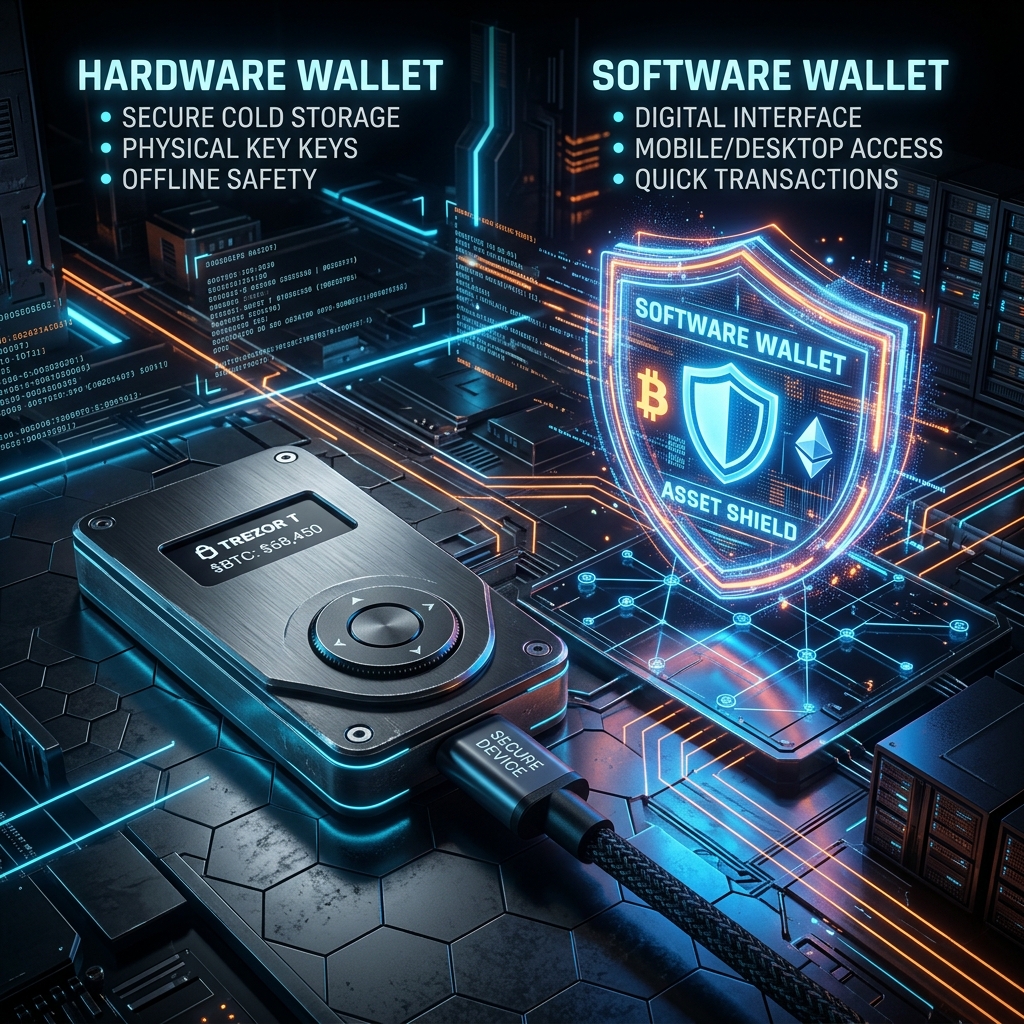
In the world of cryptocurrency, the most fundamental rule of security is also the most frequently ignored: “Not your keys, not your coins.” If you store your crypto on an exchange, or inside a hot wallet connected to your browser, your funds are only as safe as the operating system you are running. Zero-day browser exploits, remote trojans, and clipboard sweepers are active threats. To secure your capital, you must understand the paradigm of the cold storage crypto wallet.
A cold storage crypto wallet is the absolute gold standard for storing digital wealth. In this comprehensive beginner-friendly guide, we will break down exactly what cold storage is, how it works mechanically to keep your private keys offline, and why it is one of the most effective defenses against modern phishing and smart contract exploits.
What Is Cold Storage?
To understand cold storage, we must first understand what a wallet actually holds. Your wallet does not contain your crypto tokens. Your coins live exclusively as ledger records on the public blockchain. What your wallet holds is your private key—a 256-bit cryptographic number that grants you the authority to sign transactions and transfer those coins to another address.
The distinction between “hot” and “cold” custody comes down to one question: Is the private key exposed to an internet-connected device?
- Hot Storage: The private keys are stored on a device connected to the internet (e.g. browser extension files, mobile applications, exchange server databases). If the host operating system is compromised, the keys can be stolen remotely.
- Cold Storage: The private keys are generated and stored on a physical device that has never connected, and will never connect, to the internet. The keys are “cold” because they are thermally and digitally isolated from Web3 networks.
How Cold Storage Works Mechanically
Many beginners struggle to comprehend how an offline device can sign transactions on an online blockchain. The secret lies in the separation of the signing engine from the communication layer.
When you want to transfer tokens using cold storage, the workflow follows a secure split-protocol:
- Transaction Compilation (Online): You use a companion application on your computer or phone (like Ledger Live, Trezor Suite, or Rabby) to prepare the transaction. You enter the recipient’s address and the amount of coins you want to send. The app compiles this into an unsigned transaction payload.
- Payload Transfer (Offline): The unsigned payload is sent to the physical cold storage device. This is done via a USB cable, a local Bluetooth connection, or by scanning a dynamic QR code (air-gapped communication).
- Transaction Signing (Isolated): Inside the cold storage hardware, a dedicated Secure Element chip reads the unsigned payload. Using your private key (which remains locked inside the chip), the device mathematically signs the transaction. The private key never leaves the chip.
- Broadcast (Online): The signed transaction payload (which now contains your digital signature but no private keys) is sent back to the online companion app. The companion app broadcasts the signature to the blockchain network to execute the transfer.
Security Sandbox: Even if your PC is infected with a remote-access trojan (RAT), the hacker cannot steal your keys because they do not exist on the PC. The hacker can only send transaction payloads for your hardware wallet to sign. As long as you review the destination address on the device’s physical screen before pressing the buttons, you remain in complete control.
Why Cold Storage Is Your Primary Shield Against Cybercrime
Hardware wallets are built to survive in hostile environments. In 2026, the attack surface has expanded to target user vulnerabilities directly. Cold storage provides defense in three critical ways:
1. Defense Against Phishing and Domain Spoofing
If you visit a spoofed Uniswap site that prompts your hot software wallet to authorize a transaction, a hot wallet may immediately approve and execute the signature without warning. A cold storage device, however, acts as a physical gatekeeper. Because the device displays the raw transaction data on its physical screen, you are forced to pause, look at your hardware device, and notice if the contract addresses do not match, breaking the urgency cycle of phishing scams.
2. Exposing Clipboard Sweepers
Malware that replaces your copied address with a hacker’s address can easily compromise hot wallet transfers. If you copy a destination address, paste it into MetaMask, and click send, you might sign it without checking. With cold storage, the physical device screen reads the compiled data and displays the destination. When you look at the device screen, you will instantly see that the recipient address has been modified, stopping the transaction before you sign.
3. Physical Protection
If a software wallet database is exported from your browser by a local script, hackers can crack the password via brute force. Hardware wallets are protected by physical PIN numbers, and the Secure Element chip will automatically wipe itself after three incorrect PIN entries, rendering physical theft useless.
The Ultimate Shield: Pairing Cold Storage with On-Chain Auditing
While cold storage provides absolute protection for your private keys, it does not prevent you from making logical errors on-chain. If you connect your hardware wallet to a DApp and sign a transaction that grants “unlimited approval” to a malicious smart contract, your cold wallet cannot stop the contract from withdrawing your funds. The contract moves your funds on-chain, entirely bypassing the hardware device.
To defend against these DeFi-specific threats, you must combine cold storage with active on-chain risk management:
- XTSG Cold Storage Safety Module: Utilize the educational blueprints inside XTSG’s security classroom to audit your physical backup habits, steel seed storage configurations, and multi-signature setups.
- XTSG On-Chain Risk Dashboard: Cross-reference all contracts you interact with against XTSG’s live threat registry. Before signing an allowance or transaction payload on your cold device, check the registry to confirm that the destination smart contract is fully audited and holds no active exploit signatures.
Cold storage is the foundation of digital custody, but security hygiene is the active shield. Protect your assets from both local malware and on-chain drainers by combining hardware wallets with XTSG’s defensive resources.